Domains
- Humanity
- Flaws and imprudence
- Myths of origins
Symbols
- Box or jar
- Poorly endowed animal
- Backward glance
Origin and identity
Epimetheus is a Titan, son of Iapetus and Clymene.
His name means “the one who thinks afterward,” in direct opposition to his
brother Prometheus, “the one who foresees.”
He thus embodies, in Greek thought, the share of imprudence and naivety that
inhabits the human being.
Where Prometheus represents enlightened intelligence, Epimetheus stands for error, forgetfulness, and lack of anticipation.
The distribution of qualities and the foundational mistake
According to certain traditions, Zeus entrusts Prometheus and Epimetheus with
the task of endowing each animal with a particular quality.
Prometheus reflects and plans.
Epimetheus distributes the gifts without thinking in the long term:
- claws
- speed
- camouflage
- horns
- shells
- etc.
When he reaches humankind, he has nothing left to give.
This lack forces Prometheus to steal fire in order to save humanity.
Epimetheus’ error is thus one of the reasons for the permanent tension between
gods and mortals.
Pandora and the evils of the world
Zeus, wishing to punish Prometheus and humankind, creates Pandora, the first mortal woman, bearer of seductive gifts but also of the jar containing the evils of the world.
Prometheus warns his brother not to accept anything that comes from Zeus.
Epimetheus, as always, thinks too late: he accepts Pandora, and the jar
eventually ends up being opened, releasing human sufferings.
His fault is not evil, but negligence.
He is the mythological embodiment of the thoughtless act that has irreversible
consequences.
Mythological and symbolic role
Epimetheus is neither malevolent nor foolish, but he represents:
- error resulting from haste
- naivety in the face of divine power
- too-rapid acceptance
- awareness that comes too late
His contrast with Prometheus structures the whole Greek reflection on intelligence, responsibility, and the human condition.
Iconography
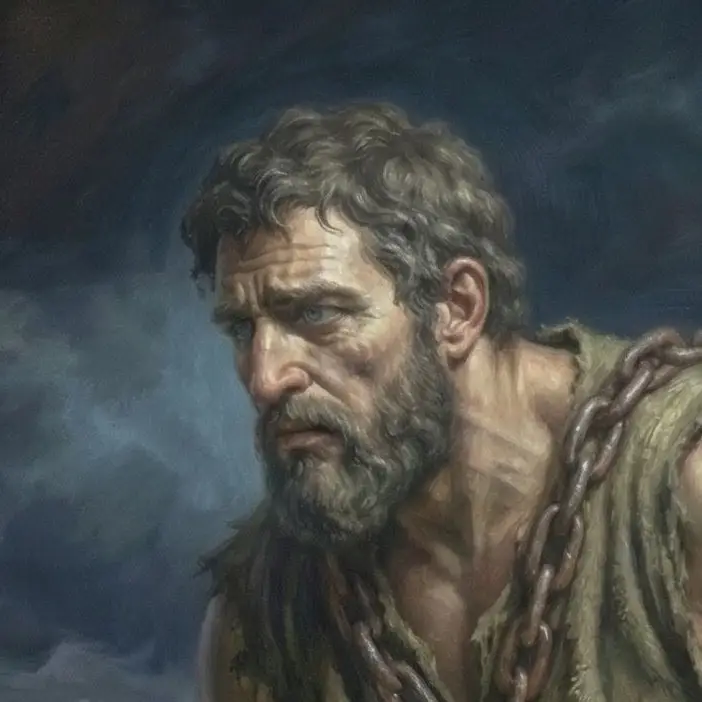
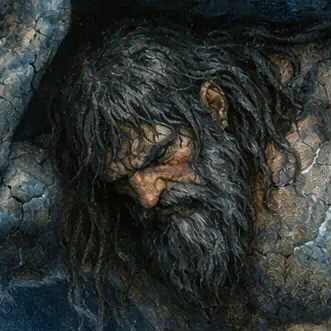
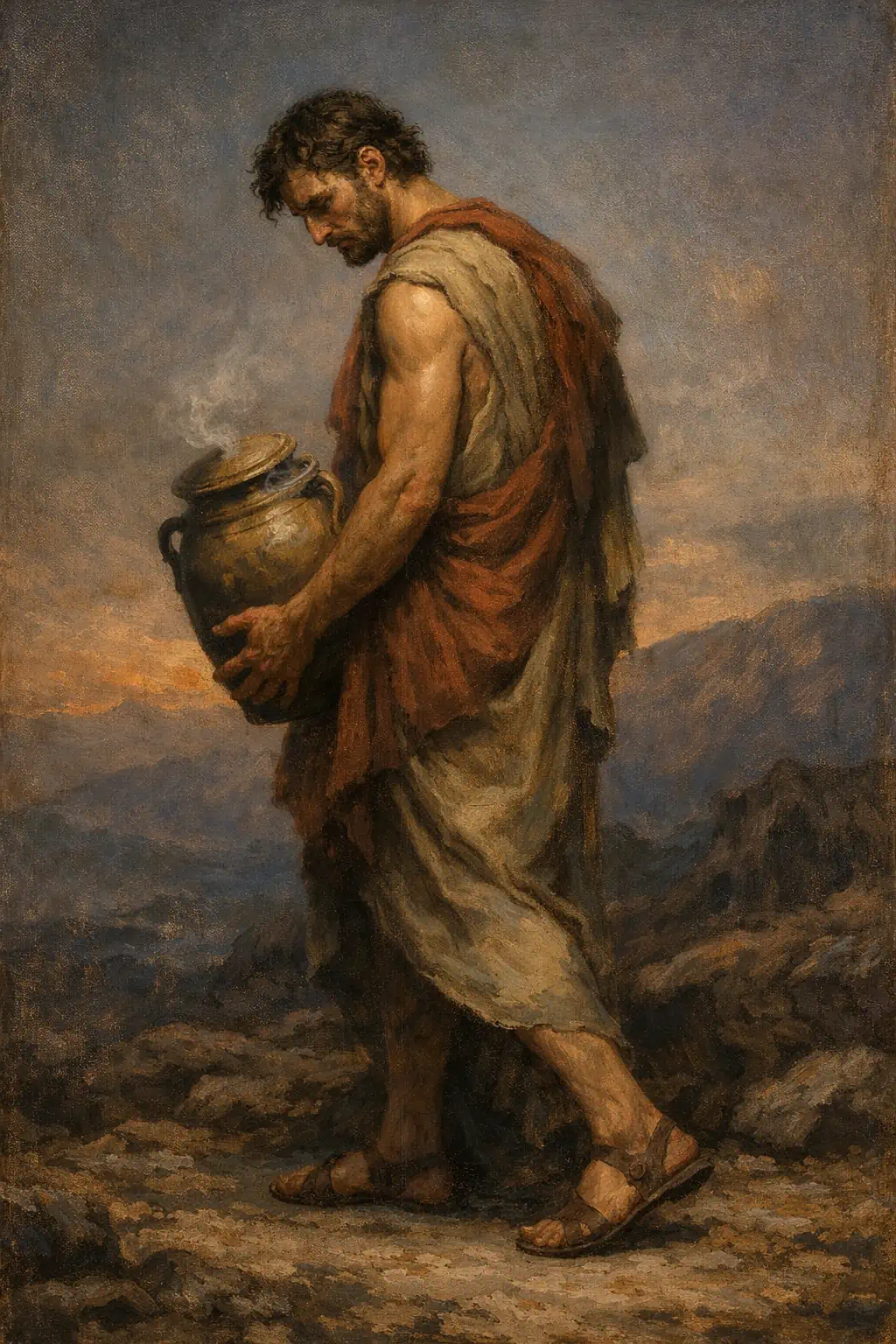
Epimetheus has no canonical representation in Antiquity. Modern works generally depict him:
- hesitant or contemplative after the fact
- accompanied by Pandora
- or facing an opened or broken jar
- sometimes surrounded by animals to evoke his error during the distribution of gifts
His iconography highlights the essential clumsiness at the heart of his myth.
Detailed genealogy
Open dedicated HoloGraphCentral figure