A weaver beyond compare
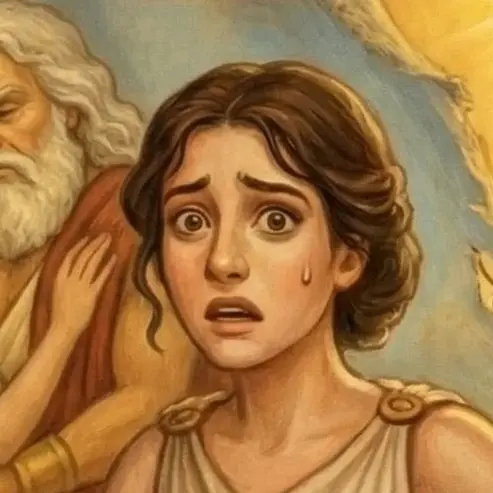
In Lydia there lived Arachne, a young woman of humble origins whose gift for weaving surpassed that of every mortal. The nymphs themselves would come to admire her fabrics, so uncanny was their fineness.
Her skill was such that many claimed Athena herself had taught her the craft. Arachne, flattered and proud, fiercely denied it. She boasted of having learned nothing from the gods. Hubris had crept into her words.
The challenge to the goddess
One day, Arachne dared to proclaim that she surpassed Athena, and that if the goddess wished to prove her superiority, she need only compete against her in a weaving contest.
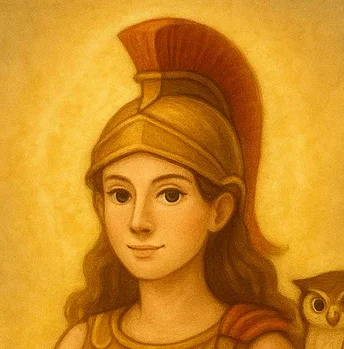
Athena first appeared in the guise of an old woman. She counseled the young weaver to be cautious, reminding her that challenging a goddess was an act with grave consequences. Arachne refused to listen.
Then Athena revealed herself. The room filled with a cold, solemn light. The contest could begin.
Two tapestries, two truths
Athena wove a scene depicting the gods upon their thrones - majestic, peaceful, orderers of the world. In each of the four corners, she showed the metamorphoses inflicted upon mortals who had dared to defy the divine.
Arachne, for her part, wove metamorphoses of an entirely different kind: the deceptions of Zeus and the transformations he had used to seduce or deceive mortal women. The work was flawless, but it laid the gods bare in a humiliating light.
Athena could not deny the quality of the work. Yet the truth the young woman had laid bare was a direct affront.
Divine wrath
The goddess tore the tapestry apart with a sharp gesture. Arachne, shattered by the act, attempted to hang herself in a fit of shame. Athena held her back before death could complete its course.
The goddess could not allow death to prevail, for the fault had to be punished - not erased.
The metamorphosis
Athena touched her with the tip of her spindle. The young woman’s body twisted, shrank, stretched. Her fingers became legs, her waist contracted like a living thread. Her eyes multiplied, her limbs grew light.
Arachne became the first spider. She would keep her talent forever - but condemned to practice it in the shadows, spinning webs as a reminder of the sacred boundary between mortals and gods.
A lesson in measure
The metamorphosis of Arachne remains one of the most celebrated myths about the consequences of hubris. It is not the quality of her art that destroys her, but her desire to place herself above the gods.
Athena punishes - but she also transforms. Rather than destroying Arachne’s talent, she transmutes it into a new form, creating a being whose very existence would be one of perpetual weaving.
And so the spider was born: silent witness to a lost challenge and a metamorphosis that, at once punishment and preservation, keeps alive the story of art and measure.