Domains
- Celestial light
- Upper atmosphere
- Cosmic origins
Symbols
- Ethereal light
- Luminous mist
- Celestial vault
Nature and essence
Aether is one of the earliest emanations of the primordial divinities. Son of Nyx (Night) and Erebus (Darkness), he represents the higher, pure, and immobile light, the one that reigns above the clouds and the summits of the world. Unlike solar light, Aether is not a phenomenon: he is a cosmic reality, an original luminosity that defines the divine realm.
For the Greeks, this higher light is the medium in which the gods move: a clear, subtle space, distinct from the air breathed by mortals.
Cosmological role
Aether symbolizes the luminous order that appears when primordial darkness differentiates itself. Together with his sister Hemera, Day, he participates in the structuring of the cosmic cycle:
- Nyx brings Night,
- Erebus establishes deep shadow,
- Hemera embodies the clarity of the human day,
- and Aether remains pure light, inaccessible to mortals.
He plays no narrative role in myths, but his existence gives the cosmos its luminous architecture: the separation between darkness, terrestrial day, and divine light.
Iconography
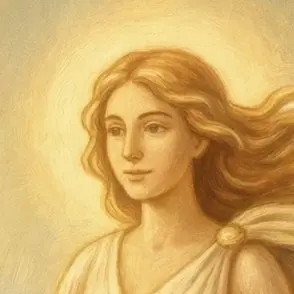
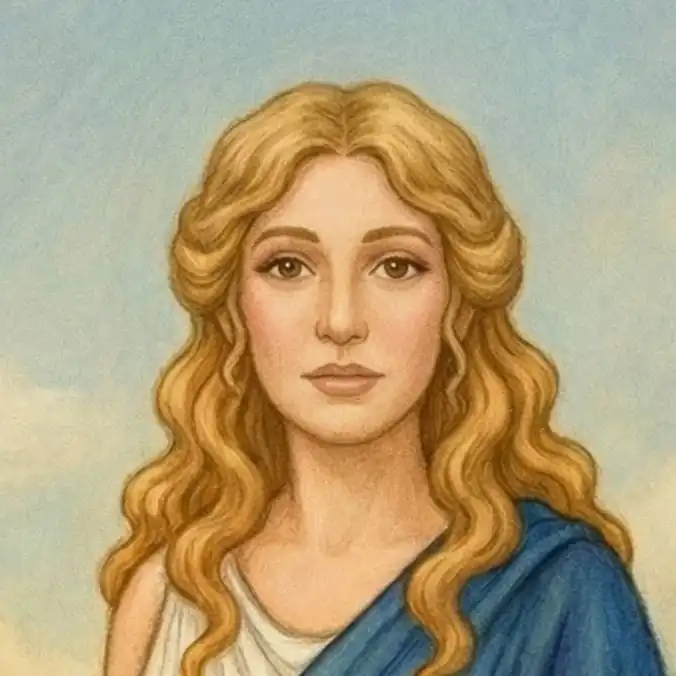
Aether is rarely depicted, and almost never in Antiquity. Modern representations show him as a luminous form or a male silhouette bathed in diffuse light, evoking transparency and altitude. His very nature - pure light - makes him difficult to represent except in a symbolic manner.
Detailed genealogy
Open dedicated HoloGraphCentral figure