Domains
- Metamorphosis
- Chthonic
- Sacred monstrosity
Symbols
- Serpents
- Petrifying gaze
- Wings
Origin and identity
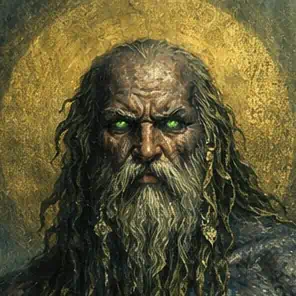
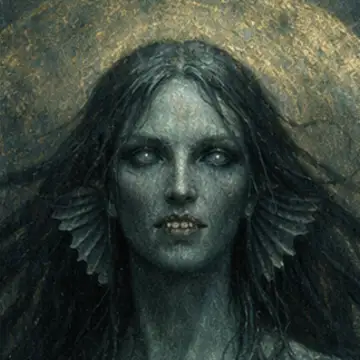
Medusa is one of the three Gorgons, daughters of Phorcys and Ceto,
archaic marine divinities linked to the depths and to chthonian forces.
Unlike her sisters Stheno and Euryale, she is mortal, a distinction
that sets her apart within the tradition and determines her role in the
narratives.
Before her transformation, several later traditions (notably Ovid) present Medusa as a young woman of great beauty, a servant in the sanctuary of Athena.
The metamorphosis
According to the most widespread versions, Medusa incurs the wrath of Athena
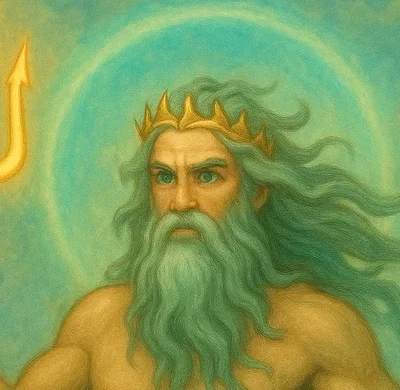
after being violated by Poseidon in the goddess’s temple.
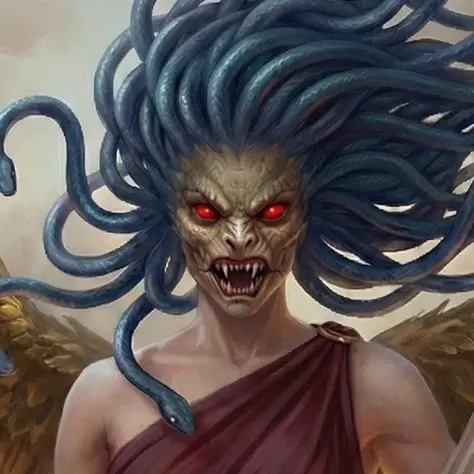
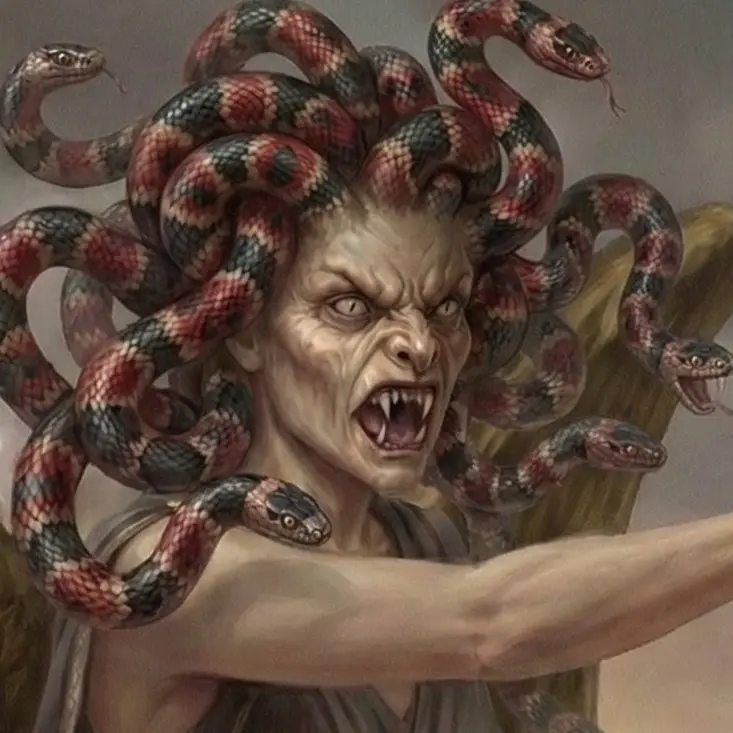
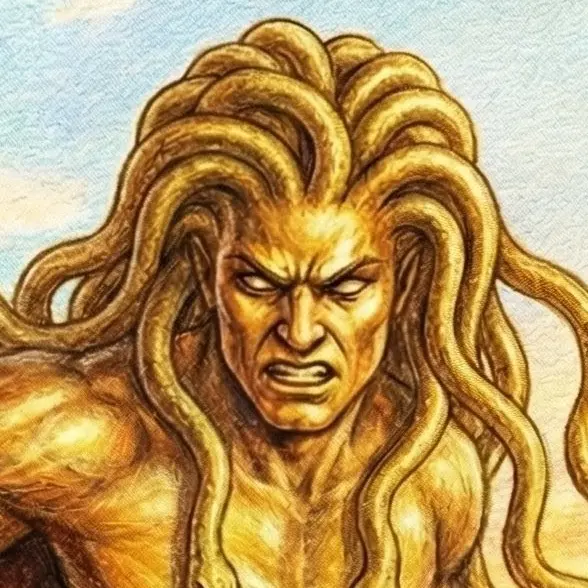
Athena then transforms her hair into serpents and her face into a petrifying
mask.
This transformation does not merely make her monstrous: it consecrates her as a sacred figure, a liminal power whose gaze embodies the boundary between the world of the living and that of raw terror.
The beheading by Perseus
Medusa is killed by the hero Perseus, aided by Athena and Hermes.
At the moment her head is severed:
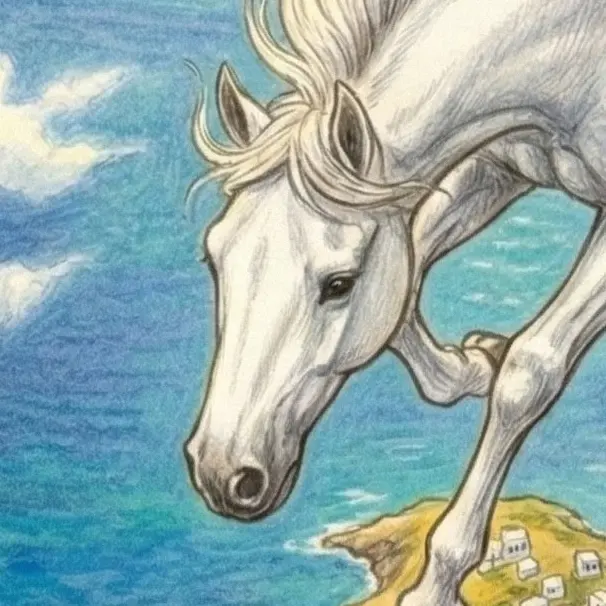
- Pegasus, the winged horse, springs forth,
- and Chrysaor, a warrior figure.
This posthumous birth is one of the most famous episodes of Greek mythology: Medusa, even in death, gives rise to exceptional beings who prolong her power.
Perseus then carries off the head, whose gaze retains its petrifying force, and Athena fixes it upon her aegis as a protective symbol.
Role and significance
Medusa embodies several major themes:
- punitive metamorphosis,
- sacred and chthonian earth,
- apotropaic fear (protection through terror),
- victimhood transformed into power.
The Gorgon is one of the most ambivalent symbols of Greek mythology: at once victim, monster, and mother of luminous creatures.
Iconography
In Greek art:
- Medusa is depicted with a frontal, frozen, terrifying face,
- tongue protruding or teeth bared in archaic forms,
- later rendered in a more feminine manner in the Classical period,
- always surrounded by serpents.
The gorgoneion, an apotropaic mask, becomes one of the most widespread motifs of Antiquity, used to protect temples, shields, and precious objects.
Detailed genealogy
Open dedicated HoloGraphCentral figure