Domains
- Sky
- Lightning
- Sacred springs
Symbols
- Wings
- White horse
- Thunderbolt
Origin and identity
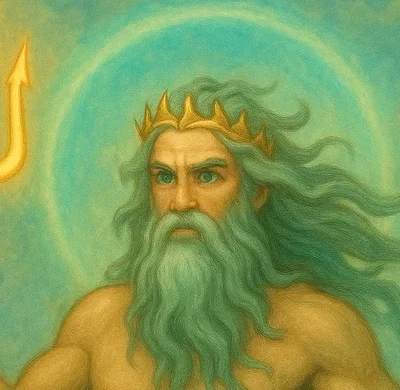
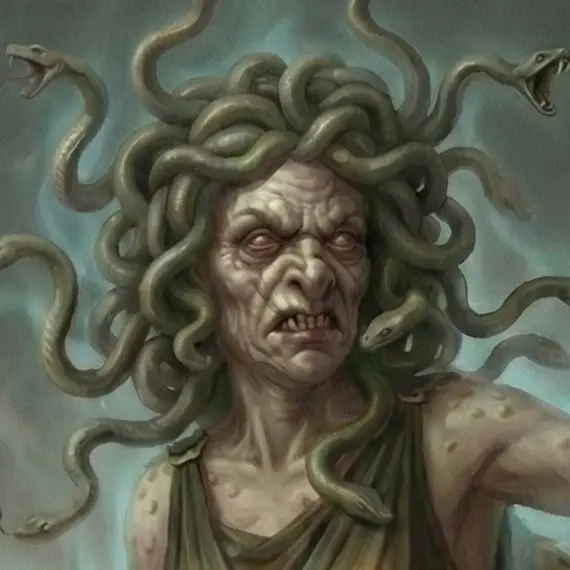
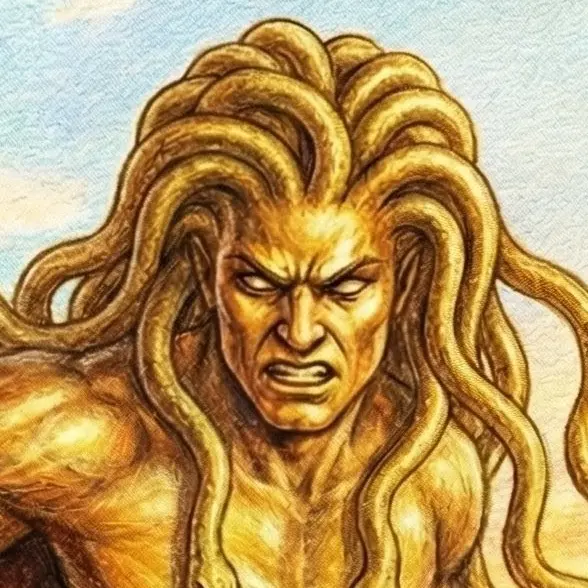
Pegasus is born from the blood of Medusa when Perseus beheads the Gorgon. In the most widespread tradition, he is the son of Poseidon, who had united his marine nature with that of Medusa before her transformation. His sudden and radiant emergence makes him a wondrous creature, linked both to chthonian forces and to the celestial world.
His name is often connected to the Greek term meaning “spring” or “outpouring,” in reference to his recurring association with sacred fountains.
Role in mythology
After his birth, Pegasus immediately flies toward the heights of the sky. He is later captured by the hero Bellerophon, with the help of Athena, and becomes his mount in the fight against the Chimera and in the accomplishment of several exploits.
In a famous tradition, Pegasus creates the spring of Hippocrene by striking Mount Helicon with his hoof. This spring becomes a sacred place for the Muses and a symbol of poetic inspiration.
At the end of his journey, Pegasus joins the heavens alongside Zeus, where he becomes the bearer of the god’s thunderbolts.
Relationships
- Father: Poseidon
- Mother: Medusa
- Sibling: Chrysaor (also born from the death of Medusa)
- Offspring: none
Pegasus has no genealogical role of his own, but belongs to the lineage stemming from Medusa and Poseidon, combining marine forces with the chthonian world.
Iconography
Pegasus is depicted as a white winged horse, leaping or in full flight. Artists emphasize his purity, speed, and marvelous nature. He is often associated with Zeus, the Muses, and sacred springs, or shown carrying Bellerophon during the battle against the Chimera.
Detailed genealogy
Open dedicated HoloGraphCentral figure