Selene
Lunar goddess and regulator of the nocturnal cycle.

Domains
- Moon
- Night
- Lunar cycles
- Monthly time
- Renewal
Symbols
- Crescent moon
- Silver chariot
- Pale horses
- Luminous veil     
Identity and Essence
Selene is the personification of the Moon in the archaic Greek tradition. Daughter of the Titans Hyperion and Theia, sister of Helios the Sun and Eos the Dawn, she belongs to the lineage of luminous powers born in the Titanic age. Where her brother embodies the blazing clarity of day, Selene represents the soft and changing light of the night.
She crosses the nocturnal sky in her silver chariot, sometimes described as drawn by pale horses or luminous bulls. Her appearance marks the passage from twilight to deep night, and her regular cycle governs the months and the tides, inscribing her influence in the measurement of time.
Cosmic Function
Selene plays a cosmological role complementary to that of Helios. She illuminates the world when the Sun disappears, offering a more fragile light, suited to silence, dreams, and intimacy. Her waxing and waning cycle makes transformation itself visible.
Through her phases, she embodies perpetual renewal. New, full, then waning, the Moon becomes a symbol of passage, mutation, and natural cyclicity. Her light does not expose with the same rigor as that of the Sun, but it reveals differently, within shadow and nuance.
Loves and Offspring
The most famous myth associated with Selene is her love for the mortal Endymion. According to tradition, she falls in love with this shepherd or hunter of great beauty. In order to preserve his eternal youth, Endymion is plunged into an endless sleep, remaining motionless and untouched while Selene comes to behold him night after night.
This suspended union between an immortal goddess and a sleeping mortal highlights the tension between eternity and human fragility. In some versions, Selene bears numerous children by Endymion, reinforcing her role as a fertile power linked to the nocturnal cycle.
Cult and Representation
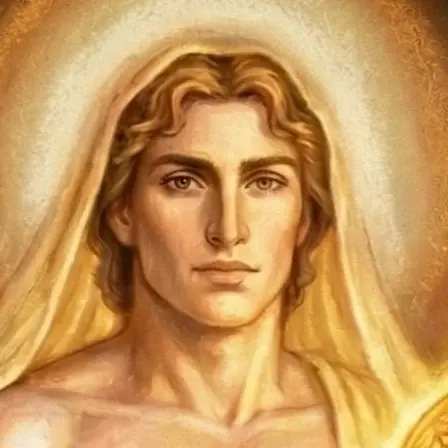
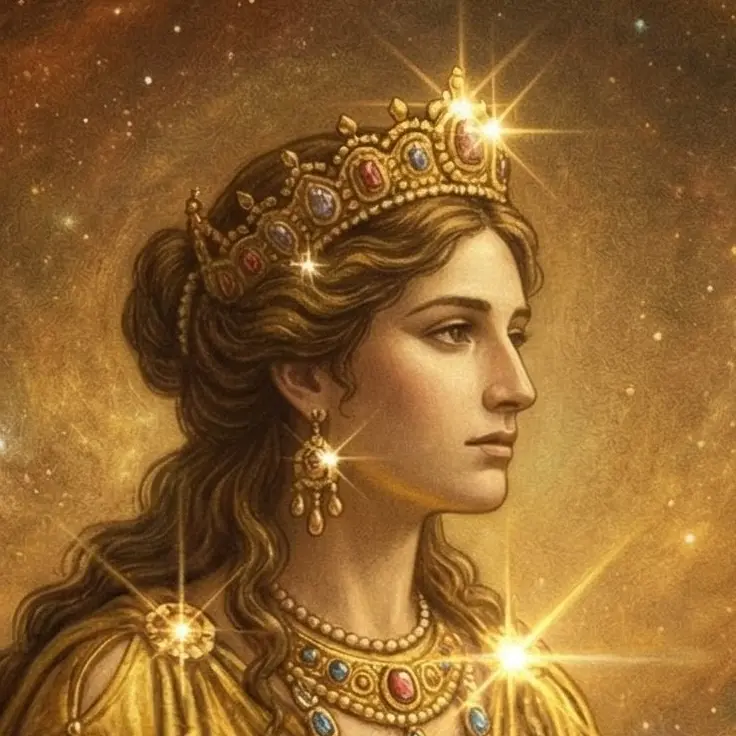
Selene is often depicted as a young woman of great beauty, her brow crowned with a luminous crescent. She may be shown driving her chariot across the starry sky or emerging above a sleeping landscape.
Her iconography emphasizes grace, gentleness, and the regularity of her movement. The crescent moon becomes her primary attribute, symbol of transformation, femininity, and cosmic rhythm.
An Enduring Lunar Figure
Over time, some of her functions draw closer to those of Artemis or Hecate, other divinities associated with the night. However, Selene remains the direct personification of the lunar body, distinct from the hunting or magical dimensions of these goddesses.
She embodies nocturnal light in its most cosmic dimension. Through her silent course and immutable cycle, she reminds that night is not absence, but another form of clarity.
Detailed genealogy
Open dedicated HoloGraphCentral figure