Domains
- Light
- Radiance
- Celestial bodies
Symbols
- Precious stone
- Solar disk
- Golden reflections
Name variants
The form Thea is sometimes found in certain transliterations.
Both refer to the same Titaness.
Nature and identity
Theia is one of the original Titanides, daughter of Gaia and Ouranos.
She embodies radiance and visible light, particularly the brilliance that
makes precious metals and stones shine.
In archaic cosmology, she represents luminous value:
that which makes things visible, resplendent, worthy of admiration.
Her name is sometimes connected to the Greek word for “goddess” (thea), but she has her own distinct identity, directly linked to cosmic brilliance.
Union and offspring
Theia unites with her brother Hyperion, Titan of celestial light.
From this union is born the luminous triad:
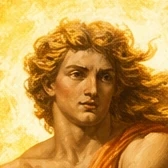
- Helios, the Sun,
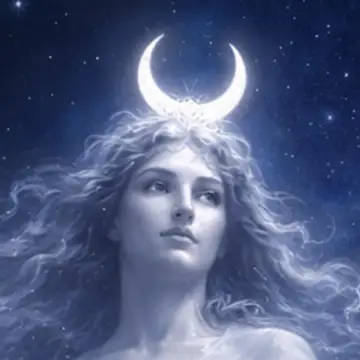
- Selene, the Moon,
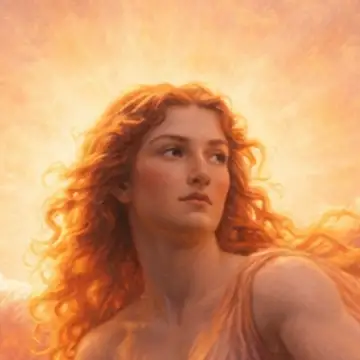
- Eos, the Dawn.
She is thus the direct ancestress of the astral manifestations of the visible world.
In certain later traditions, she is associated with the power that grants value to metals (gold, silver) by bestowing brightness and purity upon them.
Cosmological role
Theia does not intervene in narratives, but her importance is structural.
Within the mythic cosmic system:
- Hyperion represents luminous force,
- Theia represents the radiance and brilliance that make it perceptible,
- their children become the visible celestial bodies.
Theia is therefore the source of radiance, whereas Hyperion is the source of light.
Iconography
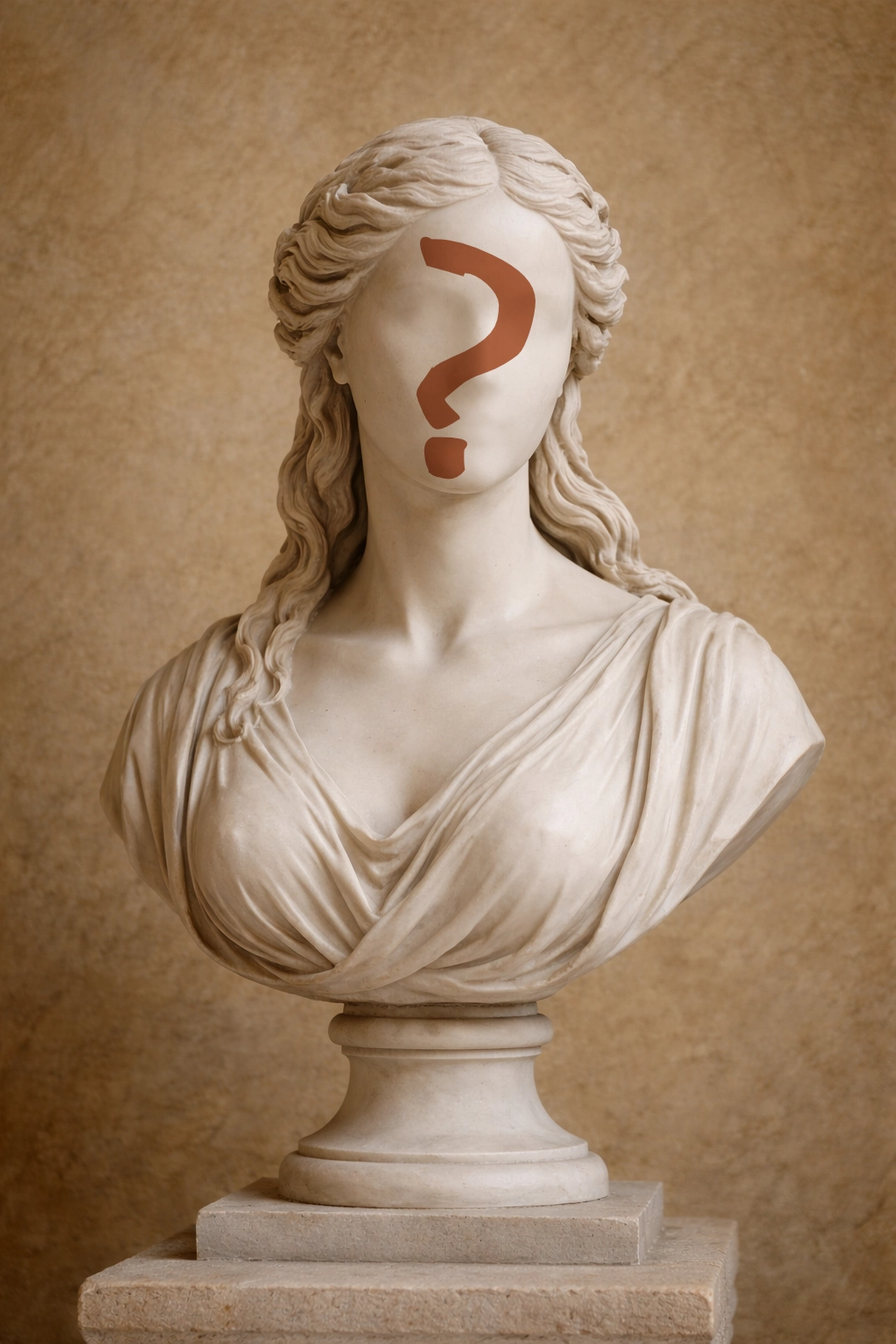
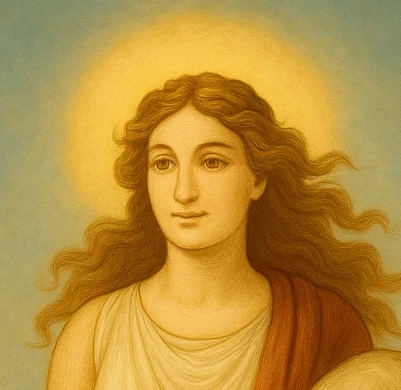
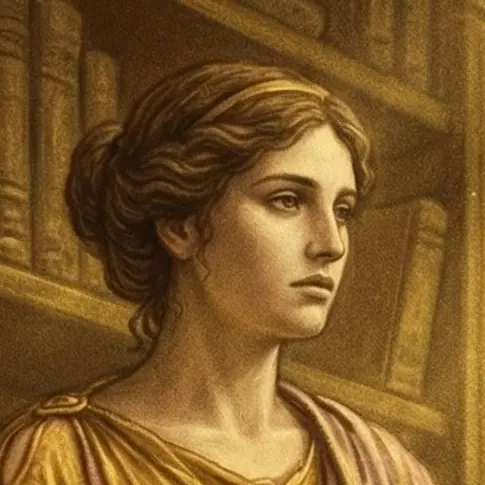
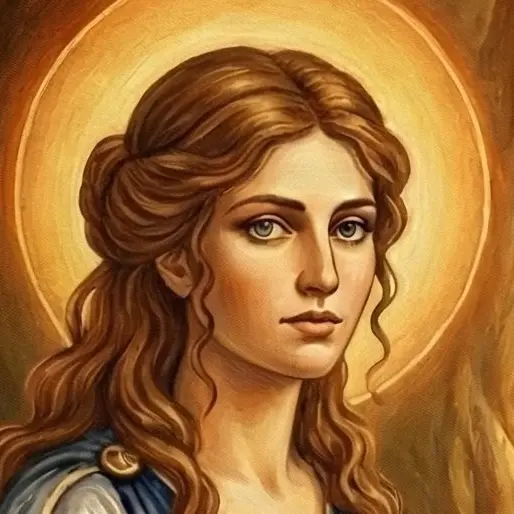
Representations of Theia are rare.
Modern iconographic tradition portrays her as:
- a luminous woman,
- draped in shining veils,
- surrounded by gold and reflections,
- often associated with celestial bodies or precious stones.
Her iconography emphasizes radiant beauty and material brilliance.
Detailed genealogy
Open dedicated HoloGraphCentral figure
Theia
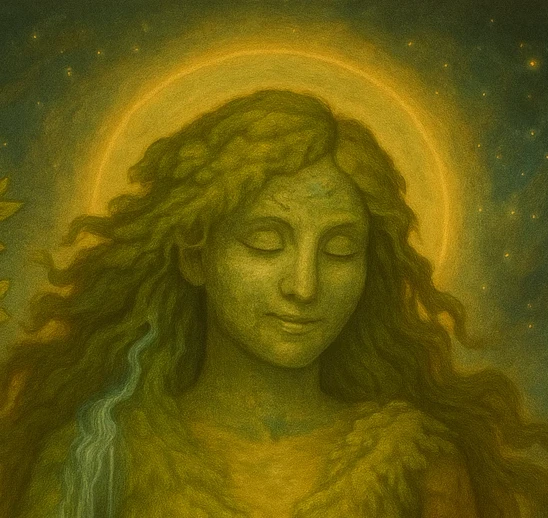

Siblings
11 entries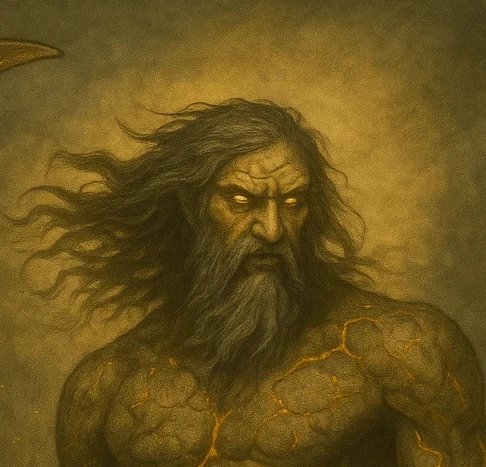

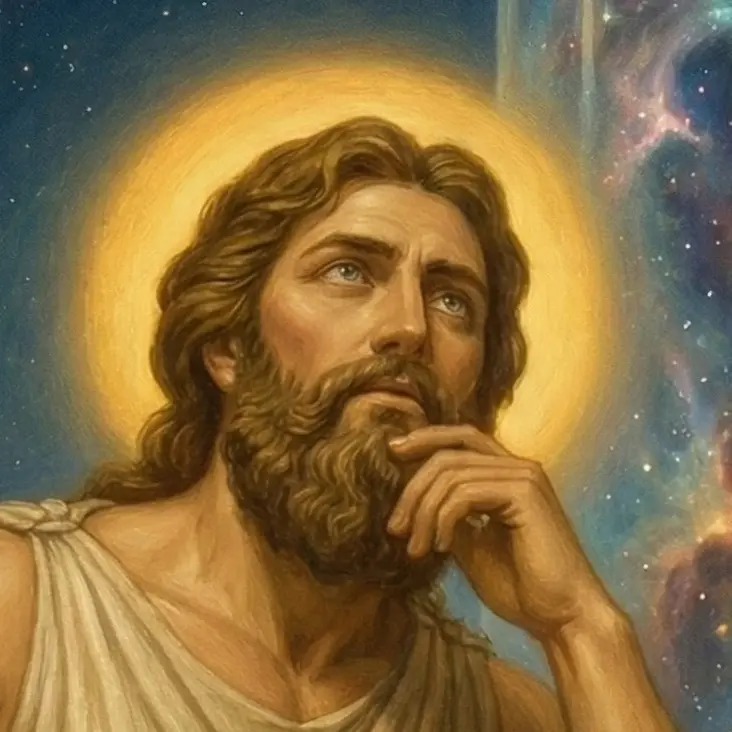



Consorts
1 entry- parents of - Eos · Helios · Selene
Hesiod ·
retained