Domains
- Night
- Stars
- Dreams
Symbols
- Star
- Deep night
Origin and identity
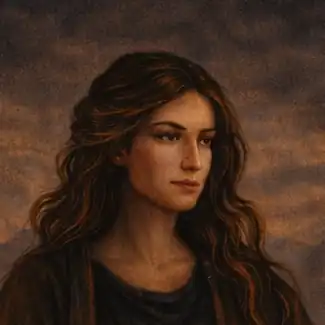
Asteria is the daughter of the Titans Coeus and Phoebe. Her name means “starry” or “she of the starry night,” which reflects her direct connection to nocturnal phenomena and the luminous signs that cross the sky. She is a liminal figure, situated between celestial light and the depths of the night.
In certain traditions, she takes the form of a quail to escape the advances of Zeus and throws herself into the sea, giving birth to the floating island of Ortygia, later identified with Delos.
Role in mythology
Asteria does not appear in extended narratives, but her place in mythological cosmology is significant. She is associated with:
- nocturnal visions,
- celestial omens,
- the symbolism of shooting stars.
According to a notable tradition, she is the mother of Hecate, goddess of nocturnal crossroads, magic, and boundaries. This lineage reinforces her link with the mysterious and obscure aspects of the night.
Relationships
- Parents: Coeus and Phoebe
- Child: Hecate (according to certain traditions)
- Union: Perses (in versions where she is the mother of Hecate)
- Extended offspring: none mentioned
Asteria thus stands at the crossroads between the Titan world and the nocturnal powers that will mark the Olympian age.
Iconography
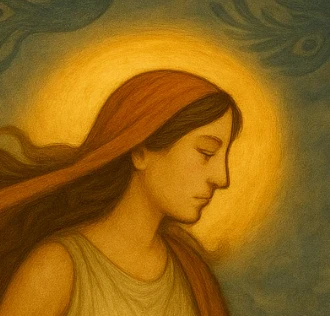
She is rarely represented in ancient art. Modern works depict her as a woman draped in night, surrounded by stars or holding a torch. In some scenes, she appears in the form of a quail or associated with the island of Delos, in reference to her myth of transformation.
Detailed genealogy
Open dedicated HoloGraphCentral figure
Asteria
Siblings
1 entry-
Hesiod ·
retained
Consorts
2 entries- Persesparents of - Hecate
Hesiod ·
retained - parents of - Hecate
Anonymous · Scholia on Apollonius of Rhodes' Argonautica · III.467 [attrib. Musaeus]
alternative