Hecate
Liminal goddess of thresholds, crossroads, and passages between worlds.
Domains
- Thresholds and crossroads
- Underworld
- Purifications
- Magic
- Passages between worlds
Symbols
- Torches
- Dogs
- Keys
- Crossroads
Nature and essence
Hecate is a profoundly archaic divinity, arising from the oldest layers of Greek mythology. According to the most widespread tradition, she is the daughter of Perses and Asteria, which makes her a Titaness linked to night, stars, and primordial cosmic forces. Unlike the majority of the Titans, she retains her power after the advent of Zeus, who acknowledges her authority and preserves her prerogatives.
She does not fully belong to any single domain. Hecate is a liminal power, present where categories blur: between light and darkness, life and death, order and chaos. This intermediate position underlies both her benevolence and her unsettling aspect.
Domains and functions
Originally, Hecate exercises extended sovereignty over sky, earth, and sea. She grants prosperity, victory, wisdom, and protection to mortals, but can also withdraw her favors. She protects travelers, sailors, hunters, young beings, and herds, while remaining a demanding power who cannot be approached without respect.
Gradually, her role becomes concentrated on thresholds: doors, crossroads, symbolic limits, and invisible passages. She becomes the guardian of transitions, goddess of critical moments and irreversible choices. In this capacity, she is associated with rites of purification, expiation, and initiation.
Role in myths
Hecate plays a key role in the myth of the abduction of Persephone. She is, along with Helios, the only divinity to witness the scene. Torch in hand, she accompanies Demeter in her search and later remains beside Persephone as companion and assistant. This lasting bond anchors her definitively within the chthonian sphere.
From the Classical period onward, she becomes a power of the Underworld, associated with the souls of the dead, funerary rites, and nocturnal forces. She is described as accompanied by infernal dogs, whose howls announce her approach. In this dimension, she governs the darkest purifications, those that concern guilt, spilled blood, and transgression.
This evolution does not replace her earlier functions, but rather layers them. Hecate remains a goddess of protection as much as a fearsome figure, capable of guiding or leading astray.
Magic, night, and wandering
Hecate is closely linked to magic, witchcraft, and spectral apparitions. She haunts crossroads, tombs, and places marked by death. At night, she is said to wander accompanied by the souls and demons she commands. She teaches occult arts, invocations, and rites of passage.
This aspect does not stem from intrinsic evil, but from mastery over powers that humans fear and poorly understand. Hecate embodies knowledge of limits, and the price to be paid for crossing them.
Iconography
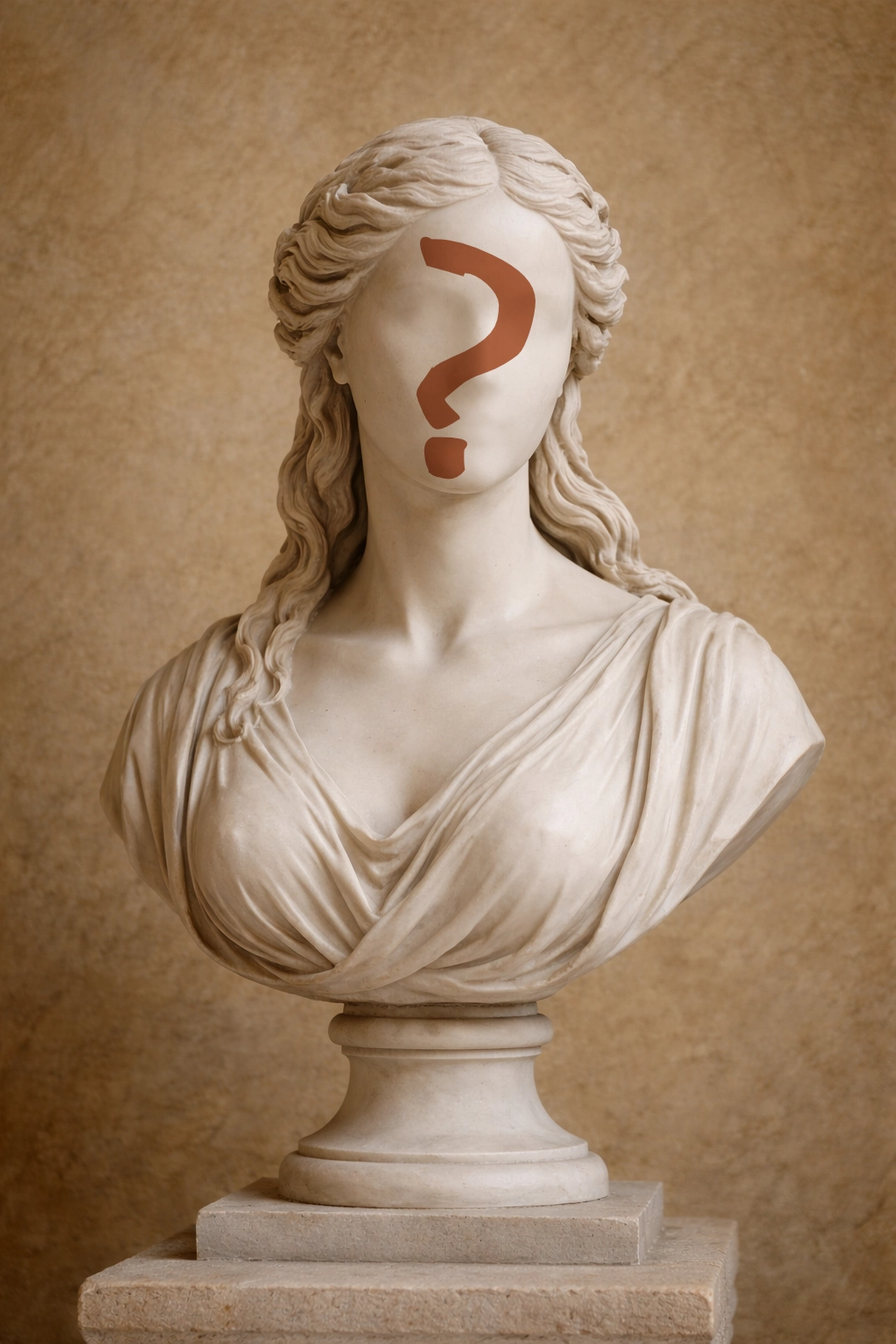
Hecate is depicted either as a single figure bearing torches, or in a triple form. She may appear with three bodies or three faces, turned in different directions, symbolizing vigilance over crossroads and multiple choices. Some traditions attribute animal heads to her, notably those of a dog, a lion, or a horse, accentuating her hybrid and terrifying character.
Statues of Hecate, called hekataia, were frequently placed at crossroads and at the entrances of houses. They made her a familiar and everyday presence, both protective and dissuasive, reminding that every threshold is a place of decision and potential danger.
Detailed genealogy
Open dedicated HoloGraphCentral figure
Hecate
Parents
6 entries-
Hesiod ·
retained -
Bacchylides · fragment 1B
alternative -
· Orphic fragments
alternative - Perses
Anonymous · Homeric Hymn to Demeter · v.24
alternative - Aristaios
Anonymous · Scholia on Apollonius of Rhodes' Argonautica · III.467 [attrib. Pherecydes]
alternative

Consorts
2 entries- parents of - Scylla
Apollonius of Rhodes ·
alternative - Aeëtesparents of - Aegiale · Circe · Medea
Diodorus Siculus · Library of History · IV.45.1
alternative
Children
4 entries- Scyllawith Phorcys
Apollonius of Rhodes ·
alternative - AegialeCirceMedeawith Aeëtes
Diodorus Siculus · Library of History · IV.45.1
alternative