Domains
- Agriculture
- Fertility
- Harvests
- Seasons
Symbols
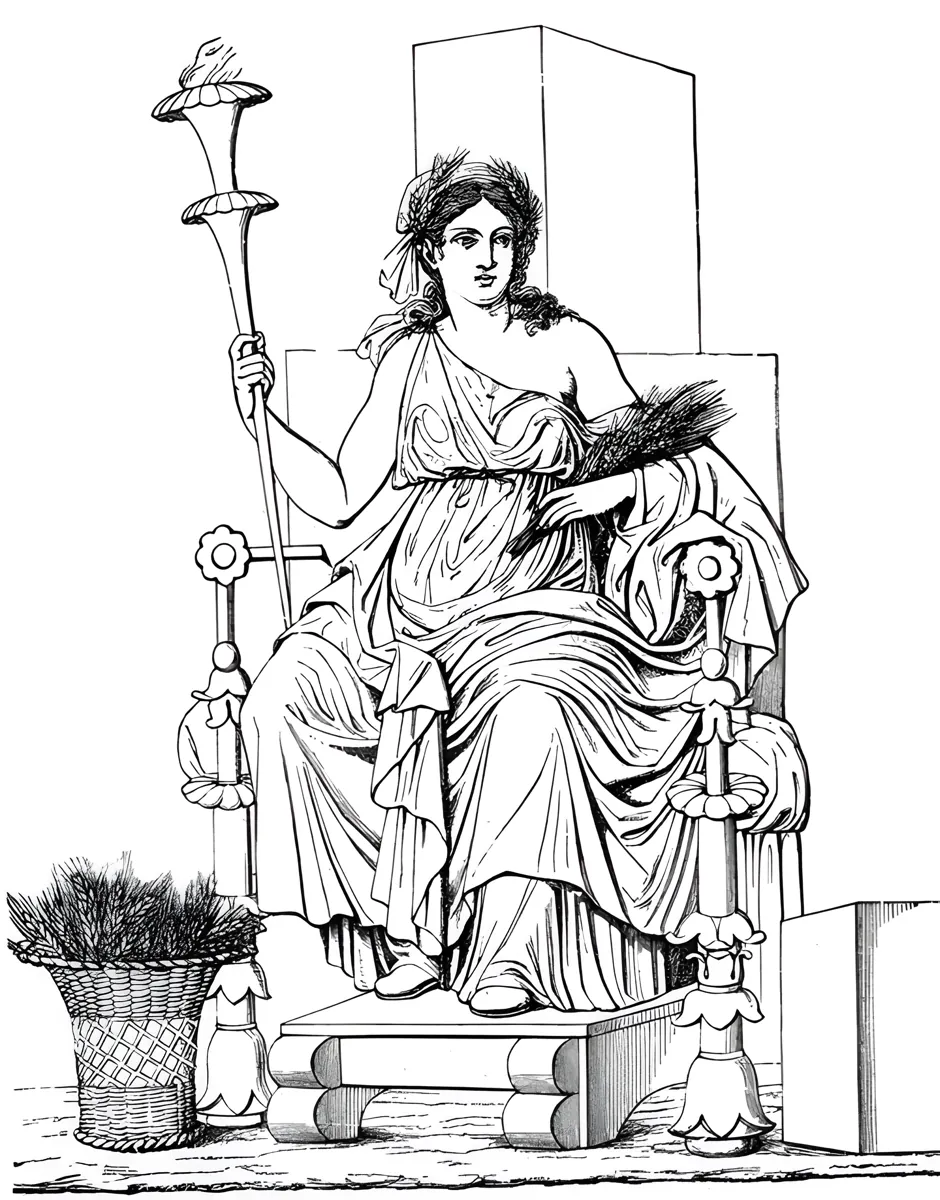
- Sheaf of wheat
- Torch
- Cornucopia
Nature and function
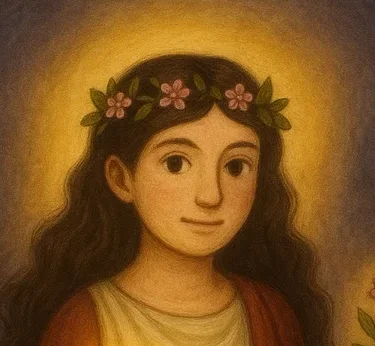
Demeter is the goddess of agriculture, harvests, and terrestrial fertility. She embodies the stability of the seasonal cycle, the generosity of crops, and the survival of human communities. Her cult is one of the oldest and most essential in the Greek world.
Foundational myth: loss and return
The central story that defines her is the abduction of her daughter Persephone by Hades. Inconsolable, Demeter abandons her divine functions, plunging the earth into sterility. This cosmic withdrawal places the gods in danger: without humans to offer sacrifices and cult, the divine order would collapse.
Zeus orders the return of Persephone, but since she has tasted the fruits of the Underworld, she must alternate between the two realms. This cycle becomes the mythological explanation for the alternation of the seasons.
Cultic role
Demeter stands at the heart of the Eleusinian Mysteries, initiatory rites among the most sacred of Greek religion. These ceremonies promised a form of hope in the afterlife, founded on the symbolic understanding of the cycle death–rebirth.
Iconography
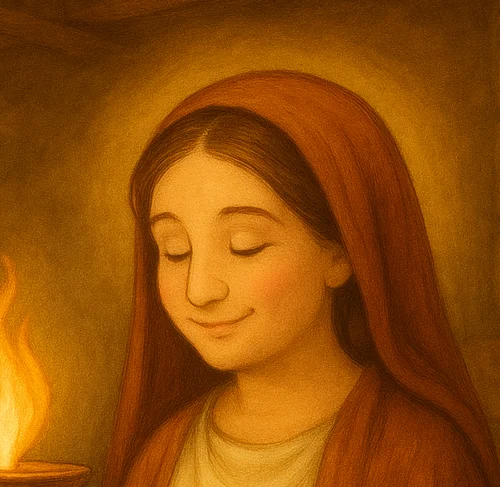
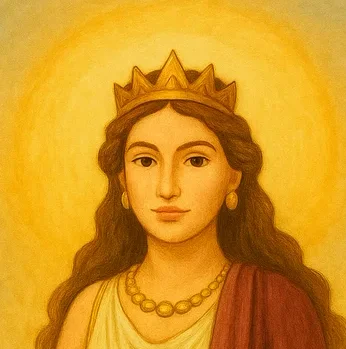
She is depicted with an ear of wheat, a sickle, a torch, or a cornucopia. Her presence evokes fertility, stability, and maternal protection.
Detailed genealogy
Open dedicated HoloGraphCentral figure
Demeter

Consorts
3 entries- parents of - Persephone
Hesiod ·
retained - Iasionparents of - Plutus
Hesiod ·
retained - parents of - Arion · Despoina
Pausanias · Description of Greece · VIII, 25, 4-8
retained
Children
5 entries- with Zeus
Hesiod ·
retained - Plutuswith Iasion
Hesiod ·
retained - ArionDespoinawith Poseidon
Pausanias · Description of Greece · VIII, 25, 4-8
retained -
· Orphic fragments
alternative