After the war, a throne still fragile
The Titanomachy is over. Cronus has been overthrown and cast into Tartarus.
The loyal Titans are chained, watched over by the Hecatoncheires.
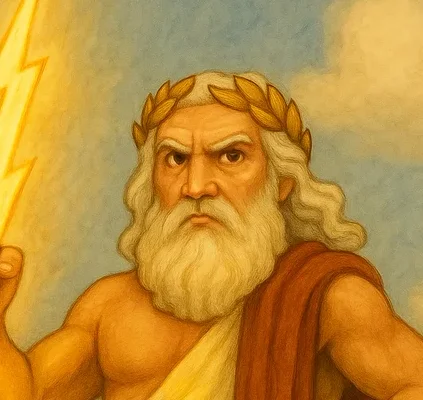
Zeus stands upon Olympus, a young victor still haloed by the lightning bolts the Cyclopes forged for him.
Yet military victory is not enough. The gods freed from Cronus, along with older primordial powers, still hesitate. The reign of Ouranos ended in violence. That of Cronus collapsed into tyranny. Nothing guarantees that Zeus will not impose the same oppression.
The world awaits a sign that this new ruler is something more than a conqueror.
Gaia, witness of the cycles
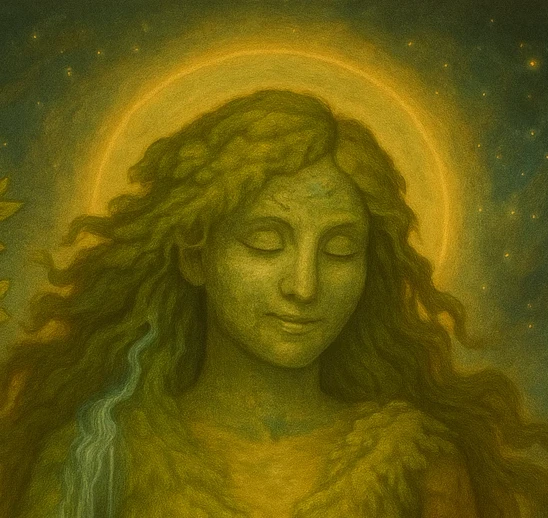
Gaia appears, bearer of the world’s memory. She saw Ouranos fall. She saw Cronus repeat the same error. She knows that fate judges kings, but that only deeds determine who rules legitimately.
She proposes a judgment. Not a trial, but a cosmic deliberation gathering:
- the gods freed from Cronus,
- the sons of Tartarus,
- the Cyclopes,
- the Moirai,
- and the three brothers born of Rhea’s stratagem.
In this council, the governance of the universe will be decided.
The division of the world
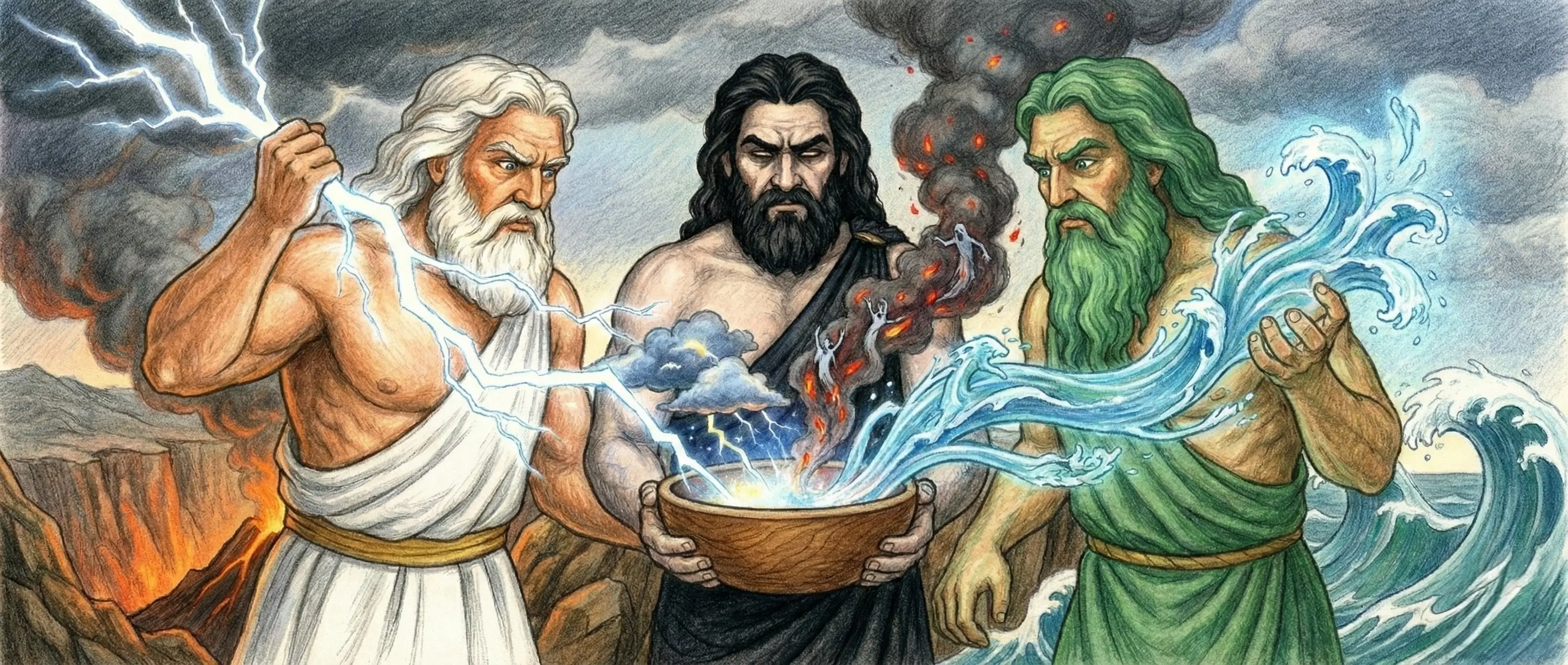
Zeus surprises the gods with his decision. Rather than claiming total power, he proposes an equitable division. The three brothers draw lots:
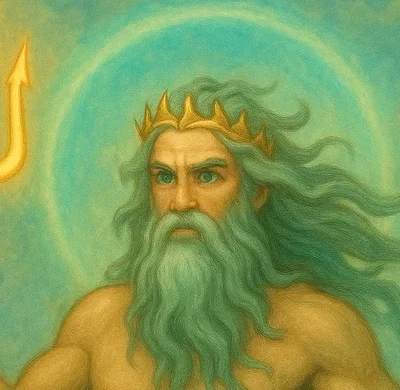
- Poseidon receives the sea,
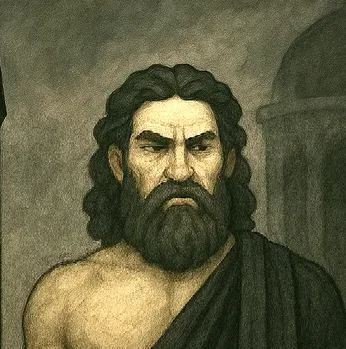
- Hades claims the depths,
- Zeus keeps the sky.
This division is more than a partition of the cosmos. It is a political act. Zeus positions himself not as absolute master but as first among equals. He accepts what the lot grants him, without manipulation or favoritism.
The Moirai recognize in him a king capable of respecting the sacred boundary of justice.
The recognition of the sisters
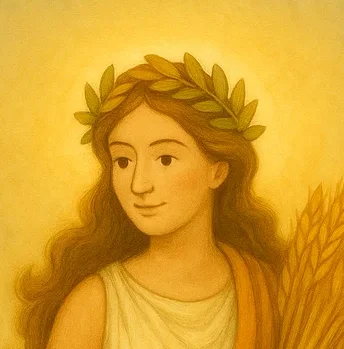
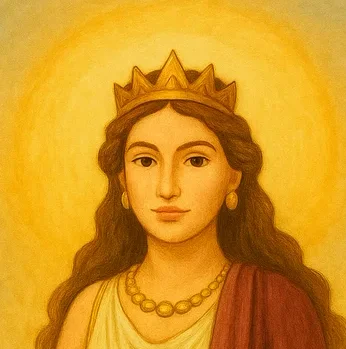
Hestia, Demeter, and Hera also watch. They endured Cronus’ terror. They would never grant loyalty to a tyrant.
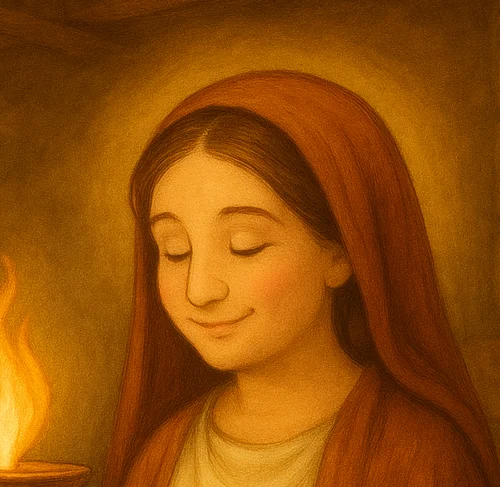
Zeus assures them protection, honor, and rightful place within the new order. Hestia receives guardianship of the hearth, Demeter that of the harvests, and Hera becomes sovereign of Olympus at his side.
They accept, not through coercion, but because his reign promises the freedom and stability that Cronus had suffocated.
The seal of the thunderbolt
The Cyclopes, freed by Zeus, raise the thunderbolt before the assembly.
They declare that it belongs only to the one who freed them, respected them, and led them into battle.
The thunderbolt becomes the symbol of his authority, not because it crushes, but because it illuminates.
The reign becomes legitimate
Gaia speaks to conclude. She proclaims that Zeus has passed the test that shattered his predecessors. He neither succumbed to paranoia nor tried to break the cycle through violence. He restored balance instead of suffocating it.
Only then do the gods bow. Olympus stands. The world now has a legitimate king.
A reign born of choice, not mere right
The legitimation of Zeus marks a rupture in divine history. For the first time, power arises not solely from prophecy or force, but from collective assent.
Zeus is not king because he won the war. He is king because, in peace, he persuaded gods and ancient powers alike that his rule would be just.
Thus the Olympian order is established: through victory, certainly, but above all through legitimacy. above all through legitimacy. above all through legitimacy.