The pursuit: Hera’s jealousy knows no bounds
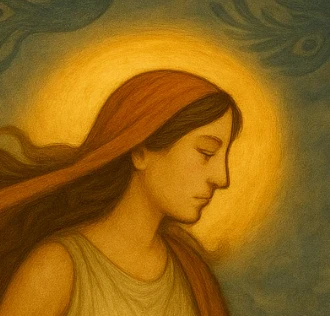
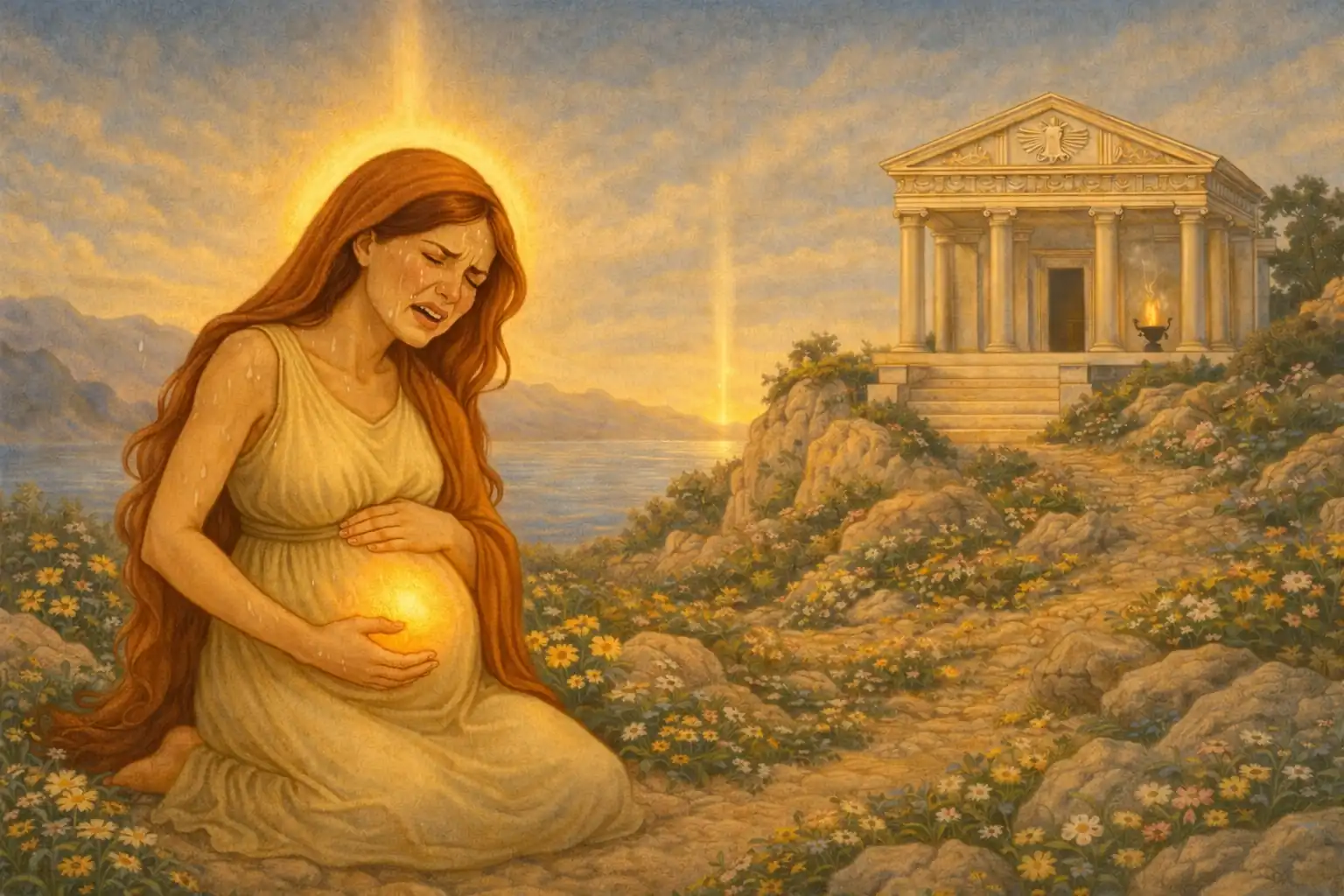
Leto, daughter of the Titans Coeus and Phoebe, carries the children of Zeus. That alone is enough to unleash Hera’s fury. The goddess swears that no land touched by the Sun will offer her shelter. She forbids every continent, every island, every rock above the waves from receiving the expectant mother. Leto becomes a fugitive - wandering, without refuge. A hunted figure in a world where every territory fears the wrath of the Queen of Olympus.
The labor pains draw near, yet everywhere she tries to set foot, the earth trembles, recoils, or closes itself off. No place will consent to bear the destiny she carries within her.
The wandering island: Delos, the land without anchor
Then Delos appears - a drifting islet with no ties, floating between sea and sky, belonging to no earthly kingdom. Because it is not a “fixed land,” it falls outside the prohibition Hera has imposed. Exhausted, driven by hostile winds, Leto makes her way there.
Delos agrees to receive her, but asks for a promise:
If your children become great gods, let them honor this island as fiercely as it protects you today.
Leto swears, and the trembling earth stills for the very first time. Even the gods hold their breath.
First birth: Artemis, the wise child
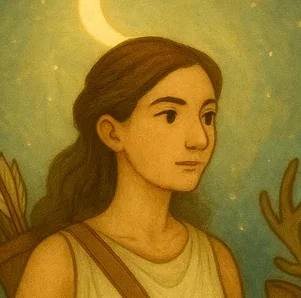
Leto gives birth first to Artemis, in the reverent silence of the nymphs. The goddess is born calm, clear, already almost sovereign. Barely out of the womb, she supports her mother, helps her to her feet, and prepares for the second birth. She becomes, in the most literal sense, the wise elder sister, the midwife.
This is the origin of one of her future domains: assistance in childbirth, the female cycles, the protection of the young.
Second birth: Apollo, the rising light
But for the second child, the pain returns - and Hera, in the height of her rage, holds back Eileithyia, goddess of childbirth, to prolong Leto’s suffering. Hermes, in some traditions, intervenes: he spirits Eileithyia away and brings her to Delos, and the labor is finally completed.
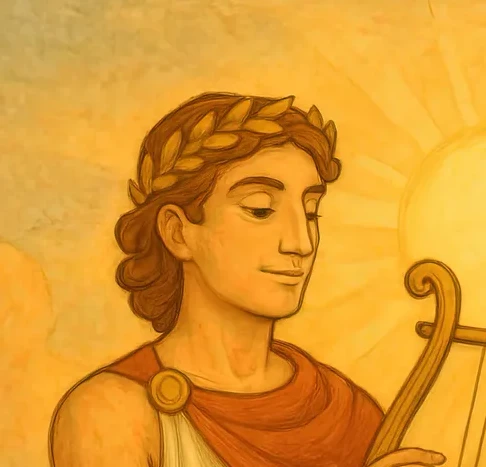
Apollo is born in a burst of radiance:
- a solar child,
- with keen, bright eyes,
- destined to reign over music, medicine, archery, and prophecy.
At once, swans circle the island nine times, heralding the coming of a great god. The waters grow calm; Delos takes root at last, becoming a fixed island - sacred, revered.
The consecration: a destiny written in light
Three days after his birth, Apollo demands his first attribute: a lyre. He plays, and his music soothes the world. Then he asks for a bow - his arrows will be straight, swift, and unerring. Finally, he lays claim to a sanctuary, and his choice falls on Delphi, which he will later free from the serpent Python.
Artemis, for her part, receives permission to roam the forests, to protect all young living creatures, and to ask Zeus for a company of nymphs to accompany her through mountains and clearings.
Delos consecrated
In gratitude, the divine twins honor Delos forever. The island’s sanctuary will become one of the most sacred in Greece - a site of pilgrimage, music, dance, and contests.
The birth of Apollo and Artemis is far more than a passing episode: from two threatened children arise two powers who will govern light, night, birth, the hunt, art, healing, and prophecy.
A divine brotherhood - complementary, inseparable. A balance that runs through the whole of Greek mythology.