A god without a dwelling
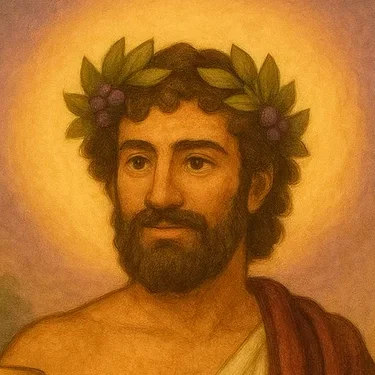
When Dionysus comes of age, he settles nowhere. He has neither palace, nor city, nor fixed throne. Unlike the other Olympian gods, he does not rule from a stable center. He walks, he crosses lands, he sometimes returns, but he never remains. His wandering is not an imposed exile; it is his mode of being.
As the son of Zeus, Dionysus could claim a permanent place among the gods, yet he does not. His power manifests only in movement, in contact with territories and peoples. Wherever he passes, something shifts. Local order cracks, and certainties begin to waver.
The vine and wine
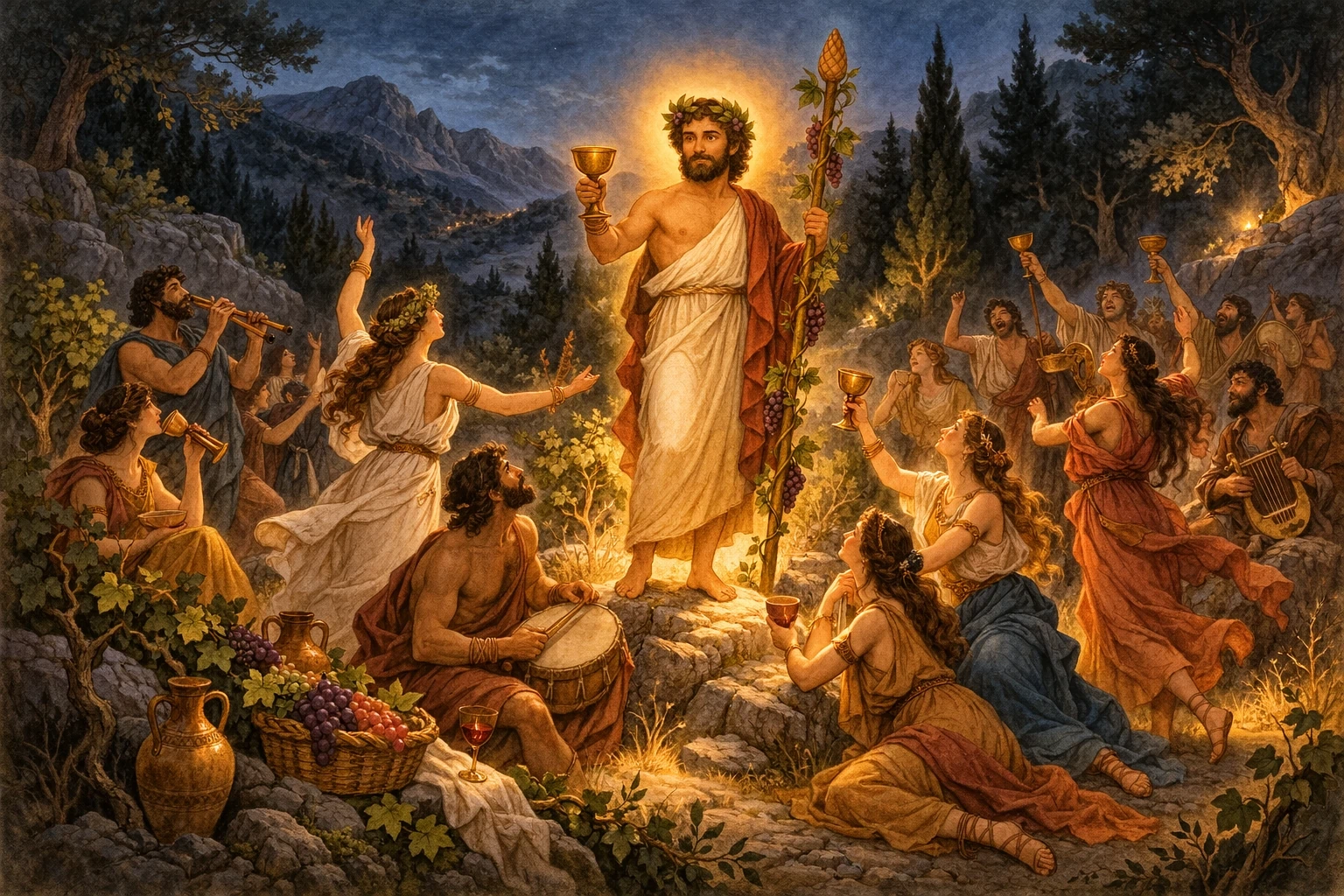
During his journeys through Thrace, Phrygia, and Lydia, Dionysus introduces the vine and teaches the art of making wine. This gift is far from trivial. Wine is not merely a drink: it alters perception, dissolves inhibitions, and lays bare hidden emotions.
Through wine, Dionysus reveals a troubling truth. Beneath the apparent self-control of human societies persist older, instinctive forces that are difficult to contain. Wine can unite, soothe, and celebrate; it can also disorient, expose, and destabilize.
Processions and rites
Dionysus never travels alone. Around him gather processions of song, dance, and insistent rhythms. These assemblies do not follow the usual patterns of Olympian worship. They take place outside temples, often at night, in mountains or forests.
These rites do not honor the god through distance and restraint. They seek instead self-loss, trance, the temporary dissolution of the individual into collective movement. Dionysus initiates a form of the sacred grounded in lived experience rather than measured ritual order.
An ambivalent power
Everywhere Dionysus appears, the effects are contradictory. Some peoples welcome his cult and find in it liberation. Others perceive only danger. Intoxication unsettles, dance disturbs, trance terrifies.
Dionysus does not compel devotion; he simply manifests. Yet to refuse his gift is to deny a dimension of reality that he embodies. Where his cult is rejected, tension grows and imbalance takes root. Order becomes rigid, brittle, ready to fracture.
Wandering as destiny
This period of wandering defines Dionysus permanently. He is neither conqueror nor lawgiver; he is an ordeal. His passage exposes what societies strive to suppress or ignore.
Dionysus continues onward, leaving behind vines, songs, and invisible fractures. His wandering prepares the coming confrontation, for where a king refuses to recognize him as a god, the already fragile balance will finally shatter.