
Semele, the mortal who caught the eye of the gods
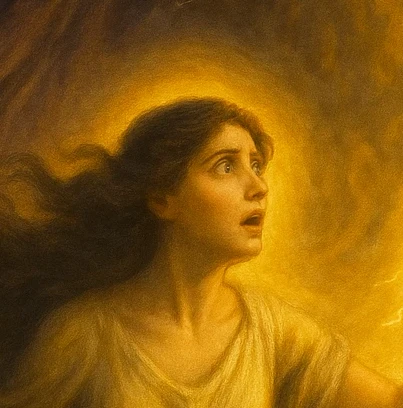
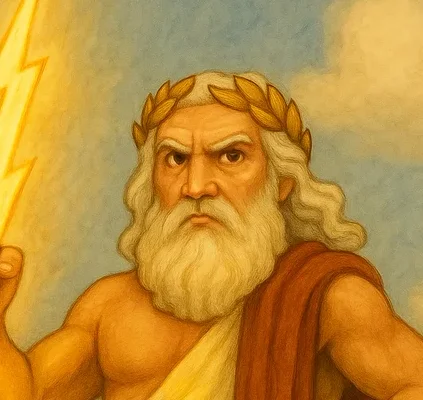
Semele, a Theban princess and daughter of Cadmus, catches the eye of Zeus. The master of Olympus, captivated, visits the young woman in secret, concealing his true divine nature. He comes to her in human form, careful not to betray the radiance that sets him apart from mortals. Their union is brief but intense, marked by an unusual closeness between a woman and a god. Semele becomes pregnant with a child destined for an extraordinary fate.
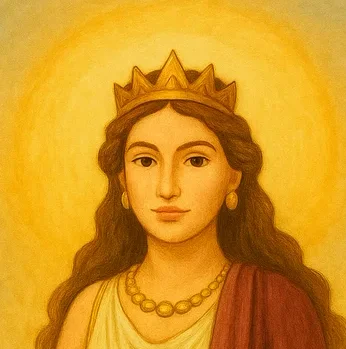
But rumor eventually spreads. What is born beyond Hera’s gaze never escapes her attention for long. The queen of the gods learns of the affair - and with it, of the child to come. Her jealousy is not merely personal: it touches the very order she embodies and defends.
Hera’s scheme: the perfect trap
Disguised as an old woman, Hera approaches Semele with feigned kindness. She neither threatens nor accuses. She insinuates.
In a gentle voice, she plants the seed of doubt:
Are you certain your lover truly is Zeus? If he is the king of the gods, let him show you his true face.
The poison works slowly. Semele is not seeking death - she is seeking certainty. She wants to know whether the man she loves is truly who he claims to be. Convinced that a revelation will put her fears to rest, she asks Zeus to appear to her as he truly is.
Zeus has sworn, by the Styx, to grant her every wish. That oath, even for him, cannot be broken.
The fatal revelation
When Zeus manifests in his full glory, the scene becomes unbearable. The divine radiance unfolds without restraint: lightning, thunder, celestial fire. What Semele beholds surpasses all human capacity; her mortal body cannot withstand such an absolute presence. She is consumed by the divine incandescence, annihilated in an instant.
Yet at the heart of the flames, something endures: the child she carries has not perished. Shielded by the very power that caused his mother’s death, he remains alive amid the destruction.
The rescue: a god carried in the flesh of a god
In an unparalleled act, Zeus plunges into the blaze, seizes the still-living embryo, and sews it into his own thigh - a sacred, inviolable place. There, sheltered from all immediate threat, the child continues to gestate, nourished by the very flesh of the king of the gods.
This extraordinary mode of gestation grants the child a singular status. Born of a mortal, carried by a god, he already defies established categories. His very existence is the product of an unstable equilibrium between destruction and preservation.
The second birth
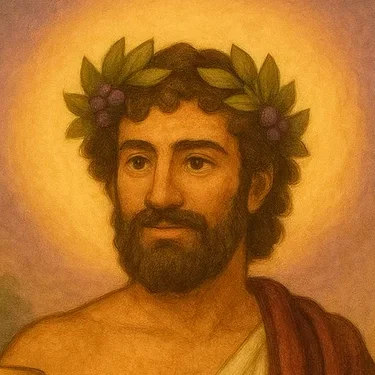
When the time comes, Zeus opens his thigh, and the child is born a second time. Dionysus enters the world in fully divine form, yet marked by an extraordinary origin. No other god had ever undergone such a passage before even seeing the light of day.
In some traditions, Zeus immediately entrusts the child to the nymphs of Nysa, or to the Hyades, to keep him out of Hera’s sight. From his very first moments, Dionysus is displaced, hidden, denied any stable ground.
His birth does not end in calm or celebration. It opens a fragile existence - shaped by flight, secrecy, and a future still uncertain.