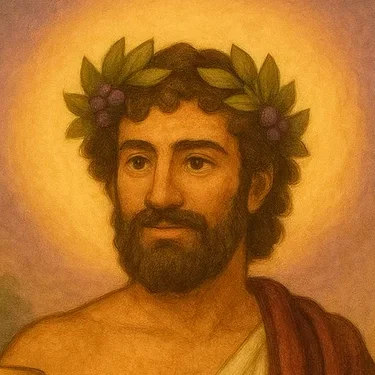
The refusal of the god
When Dionysus comes to a city, he demands neither throne nor tribute. He does not impose himself by force. His demand is simpler - and more dangerous: to be recognized. To acknowledge his cult is to admit that human order does not exhaust reality, that reason, law, and measure are not enough to contain the world.
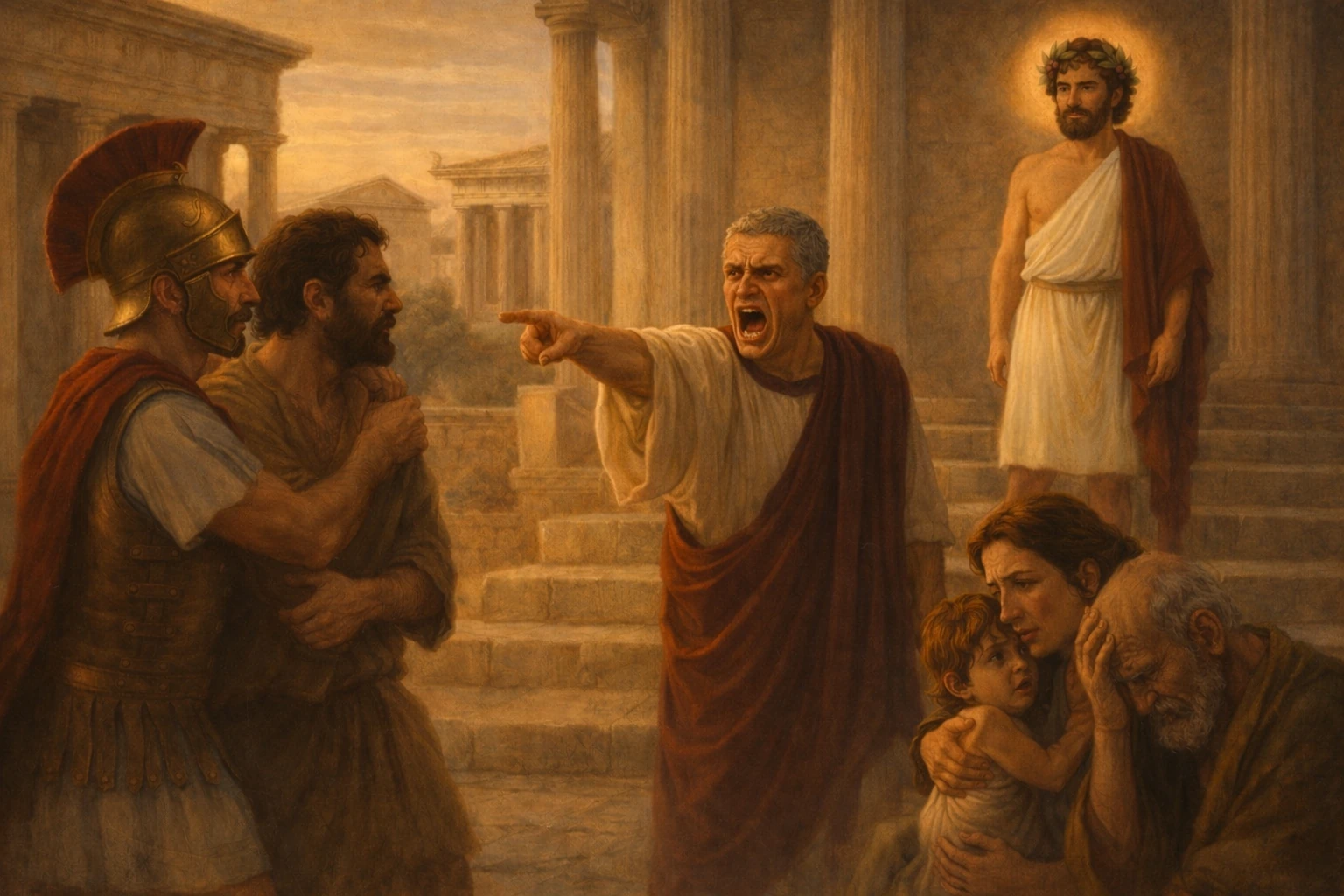
Some accept. Others refuse. That refusal is not a minor matter. It is not a religious disagreement - it is an act of closure. In denying Dionysus, kings and authorities seek to preserve an order built on mastery, hierarchy, and stability.
The fear of dissolution
Dionysus unsettles because he respects no clear boundary. His cult blurs the distinctions between men and women, between citizens and outcasts, between the inside and the outside. Collective dance, intoxication, and trance seem to threaten social cohesion.
For those who govern, Dionysus represents a political risk. He weakens structures, suspends roles, dissolves the individual into the group. Refusing his cult becomes an attempt at self-preservation. But this resistance is itself already a transgression - an act of hubris: the belief that human order can sustain itself by denying a divine force.
Madness as punishment
Dionysus does not punish immediately. He does not hurl lightning or raze cities. He lets refusal take root - then acts differently. Madness sets in. It touches the margins first, then spreads to those closest: the women, the families. Bearings blur, gestures become incoherent, speech fractures.
This madness is not arbitrary vengeance. It is the consequence of the imbalance created by refusal. In denying Dionysus, the city severs itself from a part of its own nature. What was meant to be contained surges back, beyond all control.
The collapse of authority
Faced with mounting disorder, authorities respond with force: bans, arrests, threats. But these responses only worsen the situation. The more rigidly order holds itself together, the more fragile it becomes. The harder it strains to impose measure, the more it breeds excess.
Dionysus does not topple kings from the outside - he simply exposes the instability of their power. Their authority rested on an incomplete equilibrium, one incapable of integrating the part of shadow, excess, and loss that the god embodies.
An inexorable justice
The justice of Dionysus is neither swift nor spectacular. It is slow, diffuse, inescapable. It strikes where order claims to be most solid. To refuse the god is to refuse movement, transformation, and the uncontrollable dimension of the world.
Those who stand against Dionysus are not destroyed by an external enemy. They collapse under the weight of their own rigidity. The disorder they feared becomes their fate.
And so the decisive confrontation takes shape - where a king will still believe he can imprison Dionysus, refusal will reach its breaking point.